

BBC Tech Now highlights the shift toward truly recyclable electronics
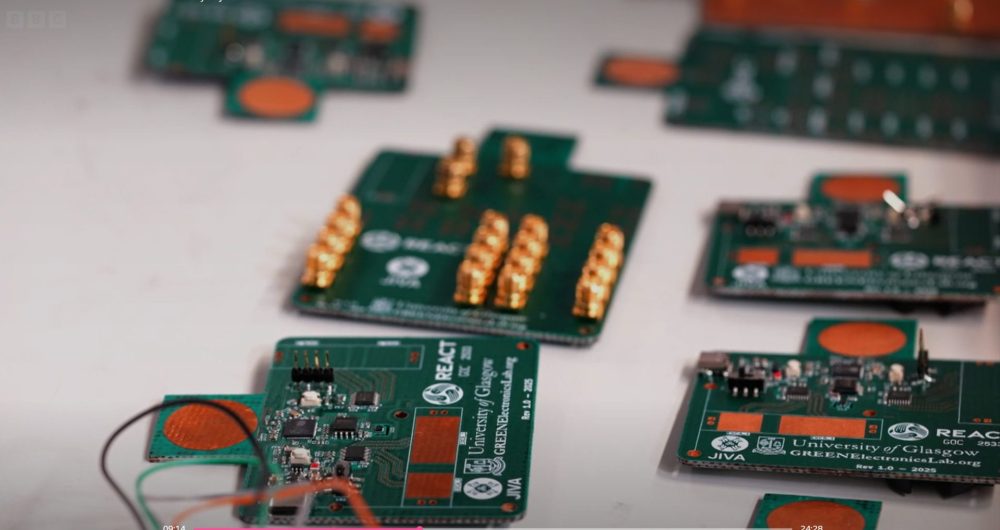
Jiva Materials has recently been featured on BBC Tech Now, in collaboration with our partners at the University of Glasgow – marking an important milestone not just for our company, but for the wider electronics industry.

The segment explored a powerful and increasingly urgent idea:
Electronics do not have to end in landfill.
For decades, sustainability discussions in technology have focused on energy efficiency, device performance, and recycling schemes. But one critical layer has largely remained invisible to the public conversation – the materials that make electronics possible in the first place.
That is now beginning to change.
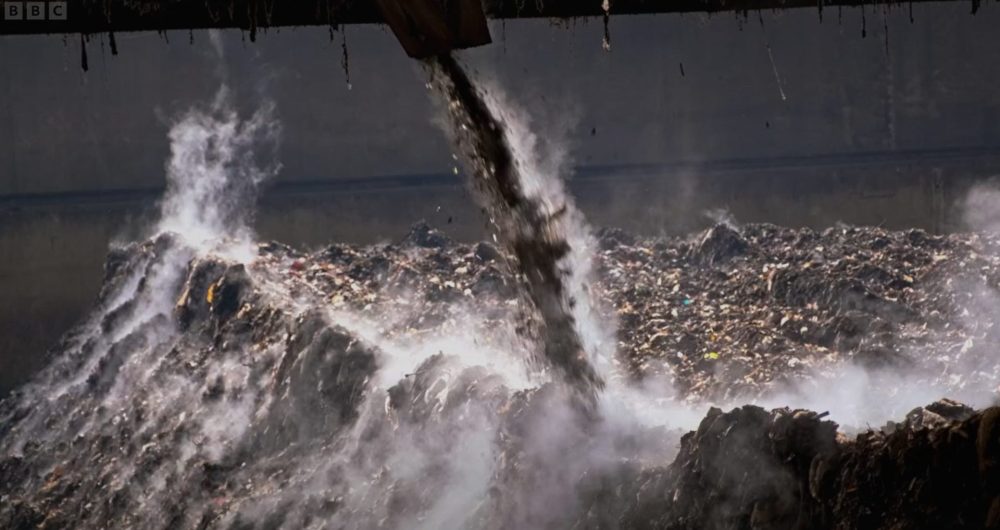
Circular Electronics Enters the Mainstream
The BBC feature highlights a shift we have long anticipated: circular electronics is moving from research labs into mainstream awareness.
As global electronic waste continues to rise – projected to reach tens of millions of tonnes annually – the industry faces a structural challenge. Traditional electronics are built using materials designed for durability but not recovery. Printed circuit boards (PCBs), the backbone of every electronic device, are particularly difficult to recycle due to their composite construction of glass fibre and thermoset resins.
This is where innovation at the materials level becomes transformative.
When major media platforms begin covering substrate innovation, it signals something important:
The foundation of electronics is finally part of the sustainability conversation.
And it should be.
Soluboard®: Rethinking the PCB from the Ground Up
During the programme, Jiva Materials’ breakthrough technology, Soluboard®, was showcased as part of the next generation of circular materials enabling responsible electronics manufacturing.
Unlike conventional PCB substrates, Soluboard® is:
-
Plant-based
-
Fully recyclable
-
Compatible with existing PCB manufacturing processes
-
Designed for material recovery at end of life
Using a proprietary natural fibre reinforcement and halogen-free polymer system, Soluboard® allows circuit boards to be separated in hot water, enabling recovery of valuable electronic components and metals without destructive processes.
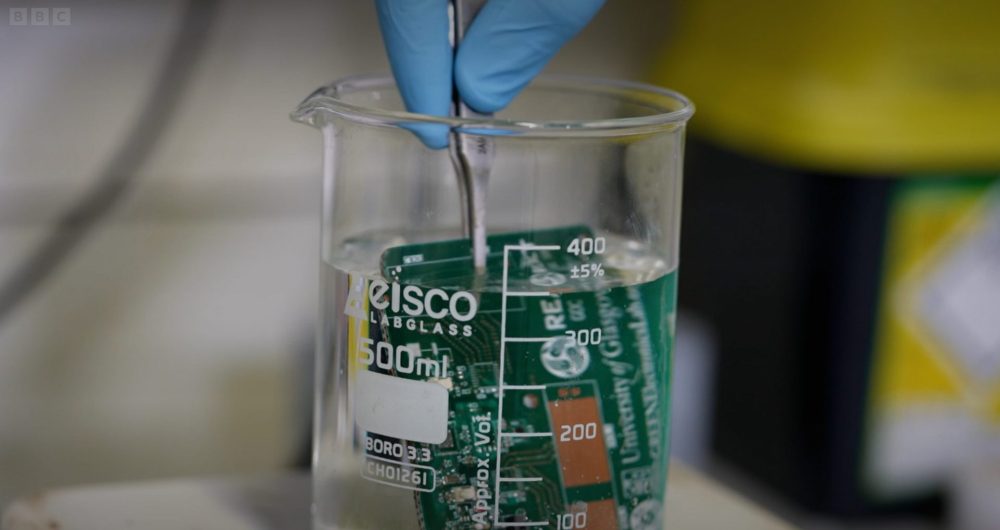
This fundamentally changes the lifecycle equation of electronics.
Instead of disposal, electronics can be designed for recovery from the start.
Why the Materials Layer Matters
Sustainability in electronics cannot rely solely on downstream solutions like recycling infrastructure or consumer behaviour. True circularity begins upstream – at design and material selection.
Historically, PCB substrates have been treated as fixed constraints rather than innovation opportunities. Yet they represent one of the largest contributors to electronic waste complexity.
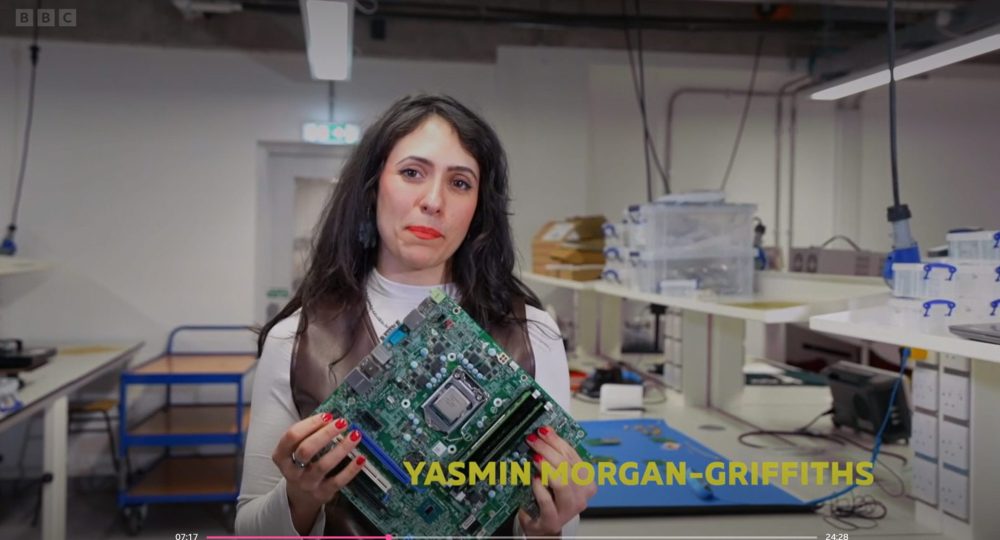
By addressing the substrate itself, circular design becomes achievable at scale.
The BBC coverage reflects growing recognition across industry and academia that:
-
Decarbonisation requires material innovation
-
Circularity must be engineered, not retrofitted
-
Electronics sustainability starts long before disposal
In short, what devices are made from matters just as much as what they do.
Collaboration Driving Innovation
Our collaboration with the University of Glasgow demonstrates how academic research and industrial innovation can accelerate systemic change.
Universities play a critical role in validating new material approaches, exploring performance characteristics, and advancing circular manufacturing models. Partnerships like this help bridge the gap between laboratory discovery and commercial adoption – ensuring sustainable technologies are both scientifically robust and industrially viable.
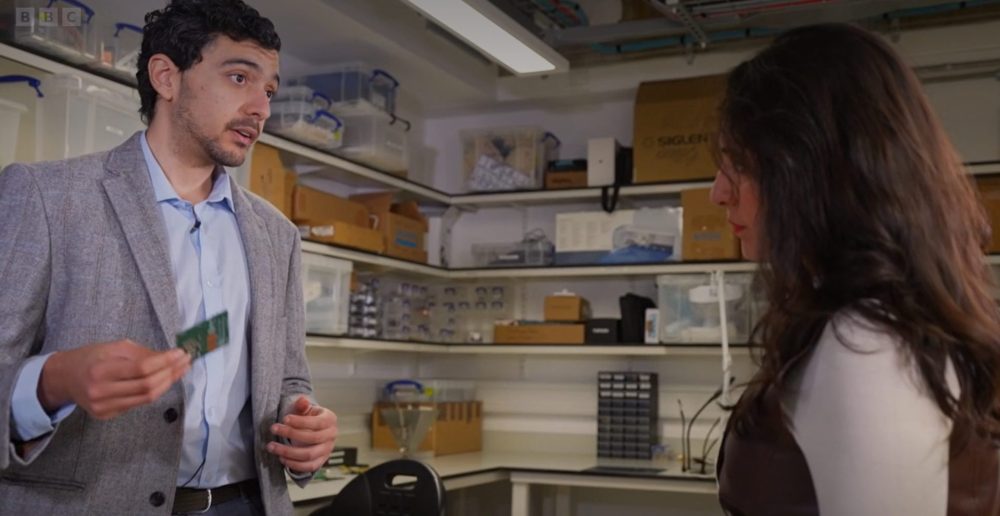
The BBC segment captured this collaborative ecosystem in action: researchers, engineers, and innovators working together toward a shared goal of responsible electronics.
A Turning Point for Sustainable Manufacturing
Media attention alone does not create change – but it reflects momentum.
When circular electronics becomes part of public discourse, it influences:
-
OEM design priorities
-
supply chain decisions
-
investor awareness
-
regulatory direction
-
consumer expectations
We are witnessing the early stages of a broader transition where sustainability is no longer an optional feature but a design requirement.
And increasingly, that transition begins with materials.
From Awareness to Adoption
At Jiva Materials, our mission has always been clear: enable electronics that perform without compromising the planet.
The BBC feature represents more than recognition; it signals alignment between industry innovation and societal awareness. Circular electronics is no longer a niche concept – it is becoming a mainstream expectation.
The next phase is adoption at scale.
As manufacturers, designers, and policymakers rethink how electronics are built, solutions like Soluboard® demonstrate that sustainability and performance can coexist.
Electronics do not need to become waste.
They can become part of a circular system – by design.
Watch the Feature
You can watch the full episode of BBC Tech Now here:
https://www.bbc.co.uk/iplayer/episode/m002rm37/tech-now-norways-fjords-can-tourism-go-green